Centum Lily Clinic Doctor's Column
Dermatology & Aesthetics Column

Why Isn't Sunscreen Working Even Though You Apply It Every Day?

Why dullness and blemishes appear even with daily sunscreen, along with the proper amount, when to apply it, how often to reapply and how to remove it.

Published 2026-11-25 Updated 2026-11-25 Reviewed by Hyeran Heo, Medical Director

If the face looks dull, blemishes appear and the skin looks rough even though sunscreen is applied every day, the way it is applied should be checked first. To put the conclusion first, UV protection depends more on the amount used, the timing of application and the reapplication interval than on the SPF value or PA label. This article covers how to apply sunscreen properly and habits for removing it.

01

Why does sunscreen lose its effect even when applied every day?

Key point
A common reason sunscreen loses its effect lies more in the way it is applied than in the product. If too little is used, if it is applied immediately after basic skincare, or if it is applied only once a day, it is hard to get proper protection even with a high SPF value.

Many people feel reassured just by looking at the SPF value or a PA+++ label, but the UV protection of sunscreen depends more on the amount actually applied and the way it is applied than on the number shown. If an insufficient amount is spread thinly, or if it is applied only once a day and left at that, the sunscreen cannot work properly, and dullness and blemishes appear even though it is applied every day.

The habit of rubbing sunscreen on hurriedly with the palms also reduces UV protection. Rubbing quickly means the sunscreen is not spread evenly across the face, leaving areas with less coverage where protection is weaker, so it is important to spread sunscreen carefully and evenly.

  • Not enough product — applying an insufficient amount keeps sunscreen from doing its job
  • Applying right after basic skincare — applying it immediately after basic skincare reduces protection
  • Applying once a day — applying it only once in the morning does not keep protection working all day
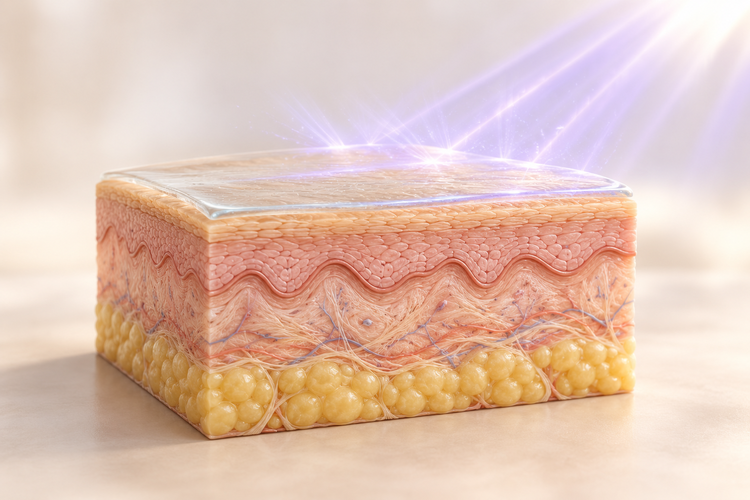
Anatomy illustration related to Why Isn't Sunscreen Working Even Though You Apply It Every Day?
02

How much sunscreen should be applied, and when?

Key point
The basic approach is to apply an amount the length of two finger joints 30 minutes before going out and to reapply at intervals of 2 to 3 hours. If SPF and PA ratings are also chosen appropriately, it becomes easier to keep the protection working throughout the day.

Sunscreen is often applied in smaller amounts than people think, so the amount should be checked first. It needs to be applied carefully not only to the face but also to the hairline, the area around the eyes, the ears and the neck, so it is important to use enough, with the length of two finger joints as the guide; if the amount falls short, areas with weak protection remain.

The UV protection of sunscreen does not last all day from one morning application, so a habit of reapplying is needed. Applying it 30 minutes before going out and then reapplying every 2 to 3 hours keeps protection working longer, which helps protect the skin not only in summer when sunlight is strong but also on cloudy days.

  • Proper amount — take an amount the length of two finger joints and apply it generously over the whole face
  • Timing — apply it 30 minutes before going out so the protection is ready
  • Reapplication interval — reapply every 2 to 3 hours so protection lasts longer
03

What problems can arise if sunscreen is not removed?

Key point
If sunscreen is left on without being removed, it can clog pores and cause breakouts, and it can even disrupt the oil-moisture balance and the skin barrier. Even on days without makeup, the remaining sunscreen should be washed off thoroughly before going to sleep.

Cleansing off sunscreen is needed every day whether or not makeup is worn, and before going to sleep, oil, cleansing water or a foam cleanser should be used to remove the sunscreen remaining on the face thoroughly. Mineral sunscreens in particular have fine particles that tend to stay in pores and form a protective film on the skin surface, so leftover residue can cause blackheads or pimples.

Whether double cleansing is necessary on days when sunscreen is worn depends on the type of sunscreen. Mineral sunscreens need double cleansing, while chemical sunscreens are mostly removed with a step 1 cleanse using a cleansing oil or balm alone. Frequent double cleansing also washes away the lipids that protect the skin, so dry or sensitive skin can skip the step 2 cleanse.

  • Clogged pores and breakouts — remaining sunscreen clogs pores and causes breakouts
  • Disrupted oil — moisture balance — sunscreen left on upsets the balance of oil and moisture
  • Skin barrier damage — sunscreen that is not removed damages the skin barrier

Hyeran Heo, Medical Director
Doctor's view

How the doctor decides

Hyeran Heo, Medical Director

I do not judge by the SPF value alone

When I hear that the skin looks dull and blemishes appear despite applying sunscreen every day, I first check the amount applied and how often, rather than the product's SPF value. Even with a high listed value, sunscreen cannot work properly if the amount is insufficient or it is applied only once a day. So I first check whether the patient uses an amount the length of two finger joints and reapplies every 2 to 3 hours.

I look at cleansing habits first for recurring breakouts

When clogged pores or breakouts keep coming back, I first ask how the sunscreen is being removed. Remaining sunscreen can lead to clogged pores, a disrupted oil-moisture balance and skin barrier damage, so checking cleansing habits before sleep is needed to identify the cause. If cleansing is insufficient, I guide the patient to correct the habit first by removing sunscreen thoroughly with oil, cleansing water or a foam cleanser.

I do not recommend double cleansing for everyone

Applying sunscreen does not necessarily mean double cleansing is required. I first look at whether the sunscreen used is mineral or chemical, and whether the skin is dry or oily. Frequent double cleansing also washes away the lipids that protect the skin, so I recommend setting the cleansing steps according to the type of sunscreen and the skin type.

Summary

In summary

Applying sunscreen properly matters, and the habit of applying an amount the length of two finger joints 30 minutes before going out and reapplying every 2 to 3 hours determines how well it protects. UV rays are a main cause of skin aging and pigmentation disorders, so to keep the skin as it is now 10 years from now, both how sunscreen is applied and how it is removed need to be corrected. If blemishes, dullness or breakouts continue despite regular use, it is advisable to have the skin checked through a medical consultation.

FAQ

Frequently asked questions

QShould sunscreen be applied on cloudy days too?
A

Yes. UV protection is needed not only in summer when sunlight is strong but also on cloudy days, because UV rays are a main cause of skin aging and pigmentation disorders.

QHow many times a day should sunscreen be applied?
A

It is advisable to apply it 30 minutes before going out and then reapply at intervals of 2 to 3 hours. Applying it only once does not keep protection working all day.

QDoes dry skin also need double cleansing?
A

It depends on the type of sunscreen. Chemical sunscreens are mostly removed with a step 1 cleanse, so dry or sensitive skin can skip the step 2 cleanse, while mineral sunscreens tend to stay in pores and need double cleansing.

Hyeran Heo, Medical Director
Medical review
Hyeran Heo, Medical Director
This content is general medical information and may not apply to every individual. Diagnosis and treatment are decided through a consultation.