Centum Lily Clinic Doctor's Column
Dermatology & Aesthetics Column

Underarm Sweating (Hyperhidrosis): How Long Does Botox Last?

How underarm Botox for hyperhidrosis works, when results appear, how long they last, what the procedure involves, and what to avoid afterward.

Published 2026-09-21 Updated 2026-09-21 Reviewed by Hyeran Heo, Medical Director

Some people find their underarms soaked and their shirts visibly stained the moment they feel a little nervous or focused, even when the room is not warm. When sweat glands in one area become overactive regardless of temperature, the condition is called hyperhidrosis, and it can make everyday social situations uncomfortable.

Underarm Botox reduces sweat gland activity by temporarily blocking the overactive nerve signals that switch the glands on. Changes usually begin 2–3 days after treatment and the effect is generally reported to last 4–6 months. This article walks through how it works, what the procedure involves, how long results last, and what to keep in mind afterward.

01

How does Botox reduce underarm sweating?

Key point
Underarm Botox temporarily blocks the nerve signals that stimulate sweat glands, so the glands release less sweat. Because it is injected directly into the dermis, the skin layer where those glands sit, the response tends to appear relatively quickly.

Sweating itself is normal. In hyperhidrosis, however, the nerves that control sweating become overexcited, so the sweat glands become active regardless of the temperature. The sweat that appears when you feel tense or concentrate is driven by the same overactive nerve signaling, and this is the signal that Botox interrupts.

For the nerve signal to be blocked reliably, the medication has to reach the dermis where the sweat glands are located. Because it acts locally, the response is easy to notice, and most people feel a difference within a few days of treatment.
Anatomy illustration related to Underarm Sweating (Hyperhidrosis): How Long Does Botox Last?
02

When do results appear, and how long do they last?

Key point
Sweating usually starts to decrease gradually 2–3 days after treatment, and the underarms typically stay drier for about 4–6 months. As the amount of sweat goes down, the characteristic underarm odor also tends to become milder, although the exact duration varies from person to person.

The effect does not appear immediately after the injection. It develops gradually once the nerve signals are blocked, starting about 2–3 days later. Because results usually last 4–6 months, some people time their treatment around the change of seasons.

As sweating decreases, the strong odor associated with it often fades as well. Because Botox works locally at the treated site, concern about compensatory sweating, where sweat shifts to other areas of the body, is relatively low.

  • Onset — sweating begins to decrease gradually 2–3 days after treatment
  • Duration — results usually last 4–6 months, with individual variation
  • Added benefit — as sweat decreases, underarm odor also tends to ease
03

What happens before and during the procedure?

Key point
Every person sweats in a slightly different area and amount, so a check before treatment matters. An iodine-starch test is used to map where sweat is concentrated, and the medication is then injected in tiny amounts into the dermis. The whole process usually takes about 10 minutes.

The zones that sweat most, and how much they sweat, differ between individuals, so identifying them accurately comes first. If this step is skipped, the areas that sweat most may not receive enough medication, which is why the pre-treatment check largely determines how precise the treatment is.

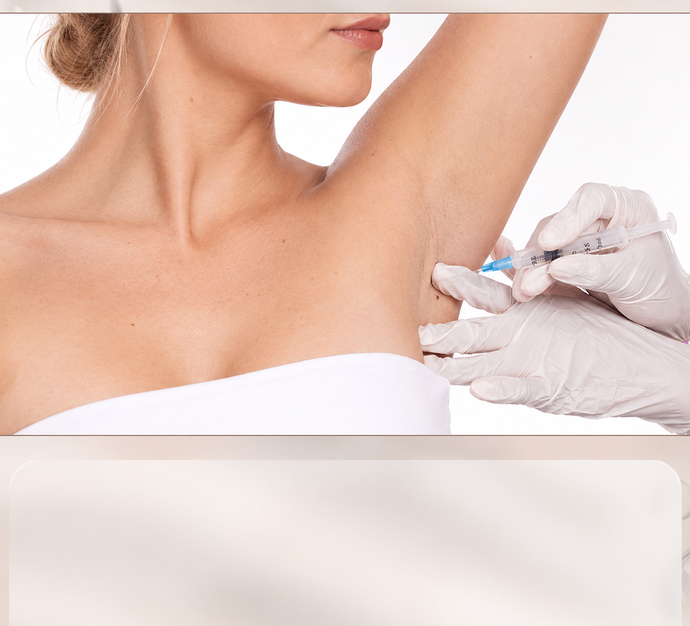
The medication is injected point by point into the dermis where the sweat glands are located. The dose and depth are adjusted to the thickness and condition of the skin and the severity of the symptoms. The procedure itself is short, at around 10 minutes.

  • Iodine — starch test — a visual check before treatment that shows where sweat is concentrated
  • Point — by-point micro-injections — small amounts are divided and placed precisely into the dermis where the sweat glands sit
  • Dose and depth adjustment — tailored to skin thickness, skin condition and symptom severity
  • Treatment time — about 10 minutes in total, so it fits into a busy schedule

How long the effect holds differs from person to person, so the next session is timed from the course.
04

What should I avoid after treatment?

Key point
Right after treatment, the medication needs to settle in place rather than spread into surrounding tissue. Avoid rubbing or pressing the area, stay away from heat for about one week, and limit harsh products on the underarms so that you get the full benefit of the treatment.

Because the medication has to settle steadily after the injection to work properly, avoid rubbing or pressing the treated area in a way that could make it spread.

For one week after treatment, avoid saunas, hot spas and strongly scented or harsh products on the underarms. Following these precautions for just those few days helps you get the full 4–6 months of benefit.

Hyeran Heo, Medical Director
Doctor's view

How the doctor decides

Hyeran Heo, Medical Director

I do not recommend treatment based on the amount of sweat alone

When someone tells me their underarms sweat a lot, I do not recommend Botox right away. I first use an iodine-starch test to see which area sweats most and how much. Because the sweating zone and volume differ from person to person, skipping this step can leave the areas that need it most without enough medication, so I always check it first.

I set the dose and depth according to your skin

I do not use the same dose for everyone. I look at skin thickness, skin condition and how severe the symptoms are, and adjust the dose and injection depth to target the dermis. Even with the same amount of medication, the change a person notices can differ depending on how deep the glands sit and the state of the skin, so this adjustment is the part I pay the most attention to.

I explain that concern about compensatory sweating alone is not a reason to delay treatment

When patients worry that sweat might move to other parts of the body, I explain that Botox acts locally at the treated site, so this concern is relatively low. I do not claim the risk is zero, however. We follow how things go after treatment and make the next decision together.

When the effect wears off, we decide on retreatment together

I tell patients in advance that the effect usually lasts about 4–6 months, and I do not assume that retreatment is needed the moment that period ends. The point at which sweating increases again differs for each person, so we review the progress first and then find the interval that suits each individual.

Summary

In summary

Underarm Botox temporarily blocks overactive nerve signals to reduce sweat gland activity. Changes begin 2–3 days after treatment, and the effect lasts about 4–6 months. Because the treatment involves mapping the sweating zones with an iodine-starch test and adjusting the dose and depth for each person, a relatively consistent result can be expected despite the short procedure time. If stained clothing or odor keeps causing you stress, it helps to have your condition properly assessed and to find a treatment interval that suits you.

FAQ

Frequently asked questions

QHow long does underarm Botox last?
A

It varies between individuals, but sweating usually starts to decrease 2–3 days after treatment, and the underarms typically stay dry for about 4–6 months. After that, the retreatment interval is decided by checking when sweating starts to increase again.

QHow long does the procedure take?
A

The sweating zones are first mapped with an iodine-starch test, and the medication is then injected in tiny amounts into the dermis. The whole procedure takes about 10 minutes, including adjusting the dose and depth to your skin thickness and symptom severity.

QWill the sweating move to other parts of my body?
A

Because Botox acts locally at the treated site, concern about compensatory sweating, where sweat shifts to other areas, is relatively low. It cannot be ruled out entirely, however, so it is a good idea to monitor how things go after treatment.

QIs there anything I should be careful about after treatment?
A

Avoid rubbing or stimulating the treated area so the medication settles in place, and for one week avoid heat and harsh products. This short period can affect how well the results hold up over the full duration.

Hyeran Heo, Medical Director
Medical review
Hyeran Heo, Medical Director
This content is general medical information and may not apply to every individual. Diagnosis and treatment are decided through a consultation.