Lip filler is a minimally invasive procedure that uses a filler based on hyaluronic acid to add volume where the lips lack it. People usually consider it when their lips are thin by nature or have become narrower and less defined with age. This article explains how lip filler works, who it suits and where its limits are, and how much volume is appropriate. In short, what matters most for satisfaction is not a large volume but a design tailored to the proportions of the face.
How does lip filler make the lips fuller?
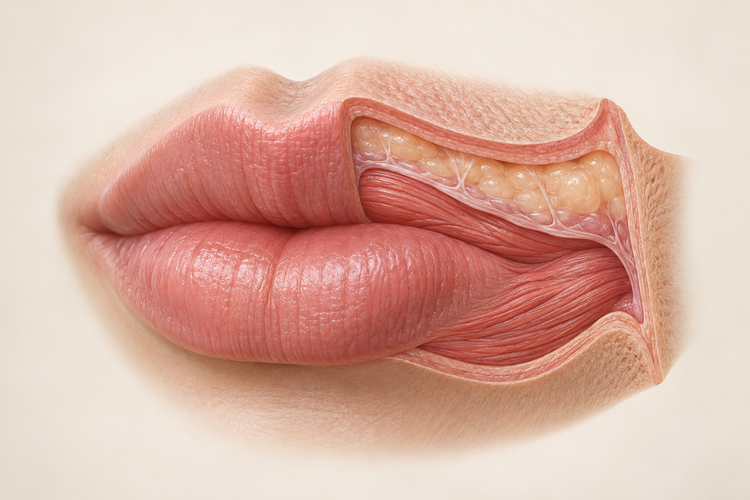
Hyaluronic acid, the main ingredient of lip filler, is a moisturizing substance that already exists in the body. For people who feel uneasy about having something injected into their skin, understanding this can ease some of that concern. The filler, in a gel-like liquid form, fills hollow areas or places that lack volume and creates a natural fullness.
Because the procedure takes only about 10 minutes, it places little demand on the time of people with busy schedules. However, even a small change in lip shape can subtly change the overall impression of the face, so it is important to confirm that the design will be tailored to the individual and will look natural rather than excessive.
- Lip volume — the most common goal is to turn thin lips into a fuller, more defined shape
- Mouth corners — used to lift drooping mouth corners that can make the face look downcast, giving a livelier, more youthful impression
- Symmetry — helps bring uneven lips into better balance
Who is lip filler suitable for?
Because lip filler works by adding volume, its effect is clearest in lips that are thin, have shrunk or have drooped and lost fullness. Changing the structural direction of the mouth corners themselves, or making the lips wider from side to side, is hard to achieve simply by adding volume, so it is important to first determine whether the concern is one that filler can address.
When people are not as satisfied as they hoped after lip filler, some of those cases involve lips that were never suited to filler in the first place. For this reason, the consultation before treatment matters: assessing lip thickness, the degree of drooping and the direction of change the person wants helps decide whether filler is the right option.
- Thin lips — lips that are naturally thin or narrow can be made fuller by adding volume
- Lips that have lost volume — filler can restore plumpness to lips that have become smaller
- Drooping lips — adding volume to drooping lips can soften a downcast impression
How much lip filler is appropriate?
The amount of lip filler is generally decided within a range of 1 to 3 cc, and in most cases the desired shape can be achieved with 2 cc or less. Injecting an excessive amount on the assumption that filler will dissolve later can lead to lumpiness or clumping, so it is advisable to decide the amount within a design range that suits the individual.
Rather than injecting a large amount from the start, it is generally recommended to begin with a small amount and add to any areas that need it later. Satisfaction depends on several factors coming together, including the amount, the filler brand (domestic or imported) and the treatment interval, but the most important factor is a design tailored to the person's features and facial proportions.