Centum Lily Clinic Doctor's Column
Dermatology & Aesthetics Column

What Is the Difference Between Mounjaro and Wegovy?

A summary of how the weight-loss injections Mounjaro and Wegovy differ in ingredient, mechanism, effect and side effects, and what to consider when choosing between them.

Published 2026-11-04 Updated 2026-11-04 Reviewed by Hyeran Heo, Medical Director

Wegovy and Mounjaro are both weight-loss injections given under the skin 1 time a week, but their main ingredients and the receptors they act on differ, so they cannot be seen as the same drug. This article sets out the differences in how the two injections work, their effects and their side effects. To start with the conclusion, the biggest difference is the mode of action: Wegovy acts on a single receptor, GLP-1, while Mounjaro acts on two receptors, GLP-1 and GIP, at the same time. However, rather than declaring one of them superior, it is important to choose the one that suits the person's physical condition.

01

How does Mounjaro reduce body weight?

Key point
Mounjaro is an injection whose main ingredient is tirzepatide, a dual agonist that acts on two receptors, GLP-1 and GIP, at the same time. It works toward weight loss by helping to promote insulin secretion and by sending fullness signals to the brain, which helps to suppress appetite.

When a person eats, hormones called GLP-1 and GIP are released in the small intestine, and both hormones play a role in promoting insulin secretion. Tirzepatide, the main ingredient of Mounjaro, stimulates both of the points where these two hormones act, taking part in insulin secretion and fullness signals at the same time; in this way it suppresses appetite and helps weight loss.

Mounjaro was originally approved by the US FDA as a diabetes treatment, but it also has a strong weight-loss effect, and it is drawing attention because blood sugar management and weight loss can be expected together. Like Wegovy, it is injected under the skin with a pen-type device 1 time a week.
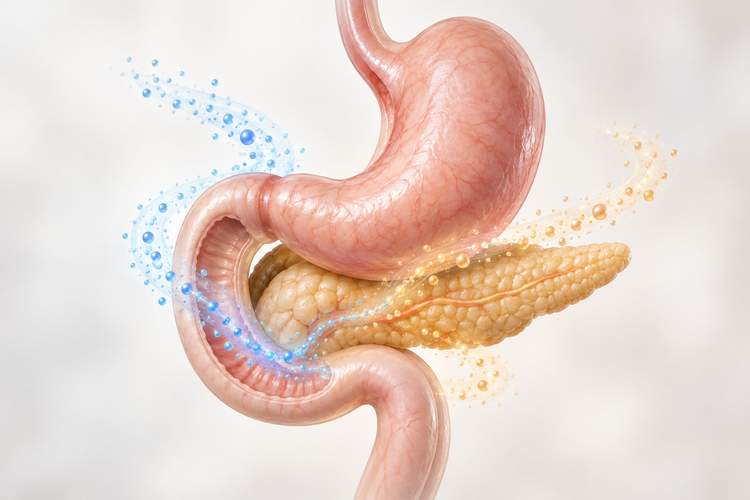
Anatomy illustration related to What Is the Difference Between Mounjaro and Wegovy?
02

What is the difference between Mounjaro and Wegovy?

Key point
The biggest difference between the two injections is their mode of action. Wegovy, whose ingredient is semaglutide, is a single agonist that acts on just one receptor, GLP-1. Mounjaro is a dual agonist that acts on the GLP-1 and GIP receptors at the same time.

Wegovy and Mounjaro have in common that both help promote insulin secretion and also regulate the release of a hormone that raises blood sugar, helping to maintain fullness and suppress appetite. Mounjaro, however, differs from Wegovy in that it acts on the GLP-1 receptor and the GIP receptor at the same time, so the two pathways work together and can produce a synergistic effect.

According to clinical research, when Wegovy and Mounjaro were compared directly, Mounjaro, with the ingredient tirzepatide, has been shown to produce greater weight loss on average. However, an average value does not determine an individual's result, so it is necessary to remember that both are prescription medicines and to decide on a suitable drug in consultation with medical staff.

  • Main ingredient — Wegovy is semaglutide, and Mounjaro is tirzepatide
  • Receptors acted on — Wegovy acts on GLP-1 only, while Mounjaro acts on both GLP-1 and GIP
  • Injection method — both drugs are injected under the skin with a pen-type device 1 time a week
  • Shared effects — they help weight loss by suppressing appetite, maintaining fullness and lowering blood sugar
03

What side effects can weight-loss injections cause?

Key point
Weight-loss injections can cause side effects such as nausea, indigestion, constipation, diarrhea and fatigue, and diarrhea is fairly common with Mounjaro. If there is no serious disease, in most cases the symptoms ease naturally within 1 to 2 weeks as the body adjusts.

Wegovy and Mounjaro both affect the gastrointestinal tract, so symptoms such as nausea, indigestion, constipation, diarrhea and fatigue can appear early in treatment. Diarrhea in particular is fairly common with Mounjaro, but if there is no serious underlying disease, the symptoms usually settle on their own within 1 to 2 weeks as the body adjusts.

Giving weight-loss injections at high doses indiscriminately can increase gastrointestinal side effects, so they must be used step by step according to the prescription and instructions of medical staff. Before treatment, it is safer to tell medical staff about any medicines being taken, past medical history and allergies, and to inform them right away if unusual symptoms continue during treatment.

  • Nausea and indigestion — common early in weight-loss injection treatment, and they lessen as the body adjusts
  • Diarrhea — appears fairly often with Mounjaro and usually eases within 1 to 2 weeks
  • Constipation and fatigue — can appear along with gastrointestinal symptoms, so their course is monitored

Hyeran Heo, Medical Director
Doctor's view

How the doctor decides

Hyeran Heo, Medical Director

I do not start by saying which injection is better

I am often asked whether Mounjaro is the better injection, but I tell patients that it is hard to judge one method as better or worse. I think what matters more than the difference in average weight loss is finding the method that suits the patient's body right now.

I look at goals and physical condition together

Before prescribing, I review together the ultimate goal of weight management, the degree of obesity, whether there are conditions such as diabetes or thyroid disease, and how sensitive the person is to side effects. Based on these factors, I plan how weight can be reduced in a healthy way.

I raise the dose step by step, without rushing

Because indiscriminate use of high doses can increase gastrointestinal side effects, as a principle I use the injections step by step according to the prescription and instructions. I also check whether early gastrointestinal symptoms settle within 1 to 2 weeks.

I make sure patients do not rely on the injections alone

Neither Wegovy nor Mounjaro is an all-purpose injection. I see weight-loss injections as able to create a synergistic effect on appetite control and weight loss, but in the long term I recommend combining them with exercise so as not to depend on the injections.

Summary

In summary

Wegovy and Mounjaro both help weight loss through an injection under the skin 1 time a week that suppresses appetite and maintains fullness, but they differ in principle: single action versus dual action. The suitable drug for each person depends on the degree of obesity, accompanying conditions and sensitivity to side effects. If weight management is difficult with diet and exercise alone, or if a weight-loss injection is being considered while diabetes or thyroid disease is present, it is advisable to have a thorough consultation with medical staff before starting.

FAQ

Frequently asked questions

QHow often are Wegovy and Mounjaro injected?
A

Both are injected under the skin with a pen-type device 1 time a week. The number of doses is the same; the receptors they act on are different.

QWhen do Mounjaro side effects ease?
A

If there is no serious disease, gastrointestinal symptoms such as diarrhea and nausea ease in most cases within 1 to 2 weeks as the body adjusts. If they continue, medical staff should be informed.

QIf you get weight-loss injections, is exercise unnecessary?
A

Weight-loss injections help with appetite control and weight loss, but they are not all-purpose injections. In the long term, it is advisable to combine them with exercise.

Hyeran Heo, Medical Director
Medical review
Hyeran Heo, Medical Director
This content is general medical information and may not apply to every individual. Diagnosis and treatment are decided through a consultation.